
The short answer
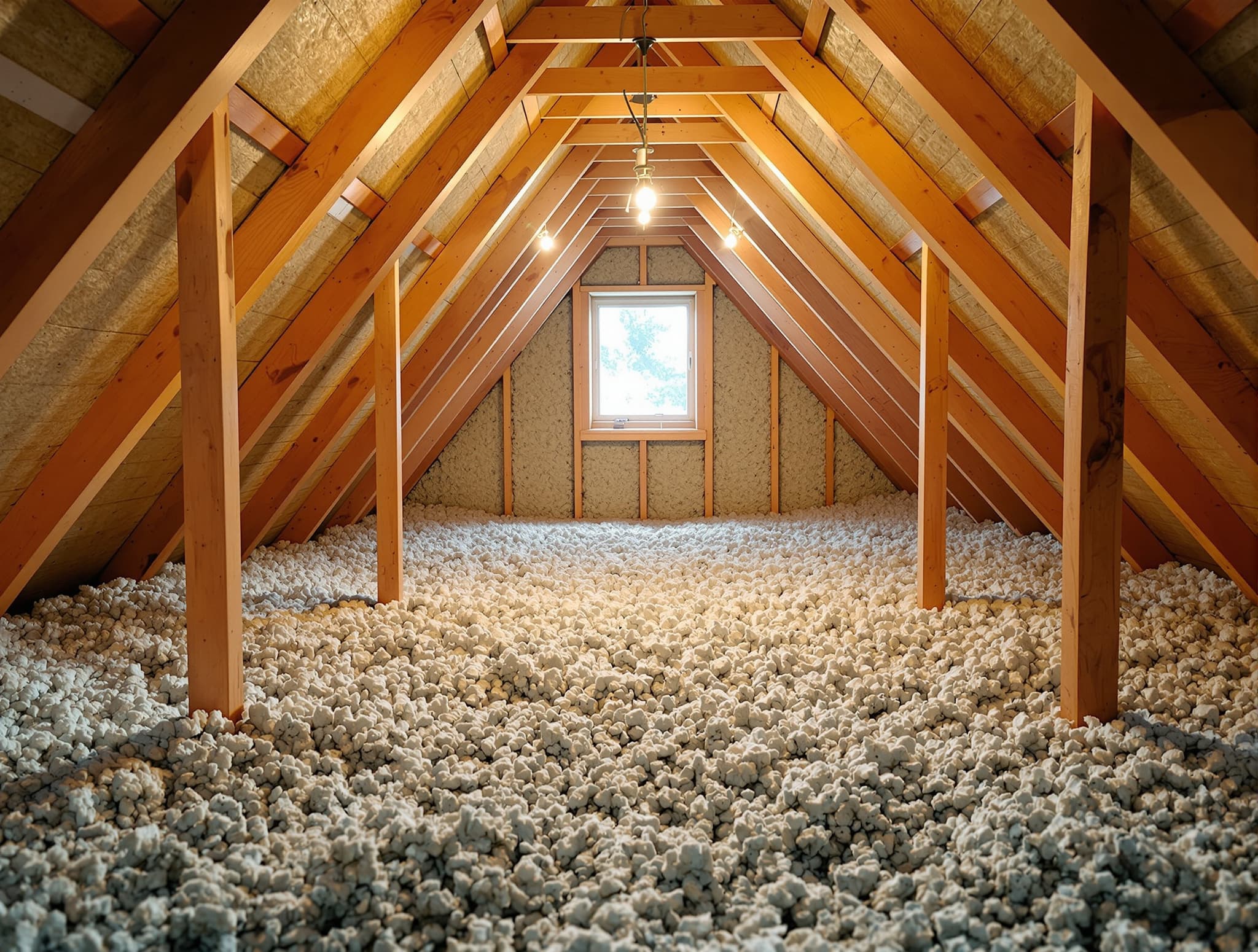
Most Long Island attics have an open, unfinished floor. For those, blown-in insulation is the best fit. Cellulose and fiberglass both work well. The key is to seal air leaks first and then add enough depth.
Spray foam on the underside of the roof makes more sense in some attics. That includes attics with heating or cooling ducts in them. It also includes finished attic rooms and cathedral ceilings. Batts can work too, but they are harder to install without gaps.
How much attic insulation a Long Island home needs
Most guidance for attics in our climate lands around R-49 to R-60. R-value measures how well insulation slows heat flow. Higher numbers mean better resistance.
Many older homes on Long Island have far less than that. Many 1950s and 1960s houses still have just a few inches of old batts. Adding blown-in on top is often the simplest way to catch up.
Depth depends on the material. Loose-fill cellulose is roughly R-3.2 to R-3.8 per inch. Loose-fill fiberglass is lower per inch, so it needs more depth. Either way, reaching R-49 usually takes well over a foot of material.
Signs your attic needs more insulation
- You can see the tops of the floor joists above the insulation.
- Upstairs rooms run hot in summer and cold in winter.
- Ice dams form along the roof edge after snow.
- Heating bills stay high even with a newer furnace or boiler.
Ice dams often point to heat escaping into the attic and warming the roof. Poor attic venting can add to the problem.
Blown-in cellulose for attics
Cellulose is made mostly from recycled paper. It is usually treated with borate to resist fire, mold and pests. A machine blows it across the attic floor.
It fills gaps around joists, wires and pipes well. That makes it good at slowing air movement through the insulation itself. It does settle a bit over time, so installers blow in extra depth.
The main weakness is water. A section soaked by a roof leak usually needs to come out. Fix any roof leaks before adding it.
Blown-in fiberglass for attics
Loose-fill fiberglass is made from spun glass fibers. It does not soak up water the way cellulose can. It also settles less over time.
It has a lower R-value per inch, so the layer needs to be thicker. It is also lighter and less dense than cellulose. For most attic floors, either one is a solid choice. Just install it to the right depth.
Fiberglass and mineral wool batts
Batts are pre-cut blankets that fit between the floor joists. Many homeowners pick them because they seem easy to install. The catch is fit. Gaps at the edges and batts squeezed around wires both lower the real R-value.
Batts work best in open, regular joist bays with few obstacles. Mineral wool batts are denser and resist fire well. In a crowded attic, blown-in usually does a better job of filling every space.
When spray foam is the best attic insulation
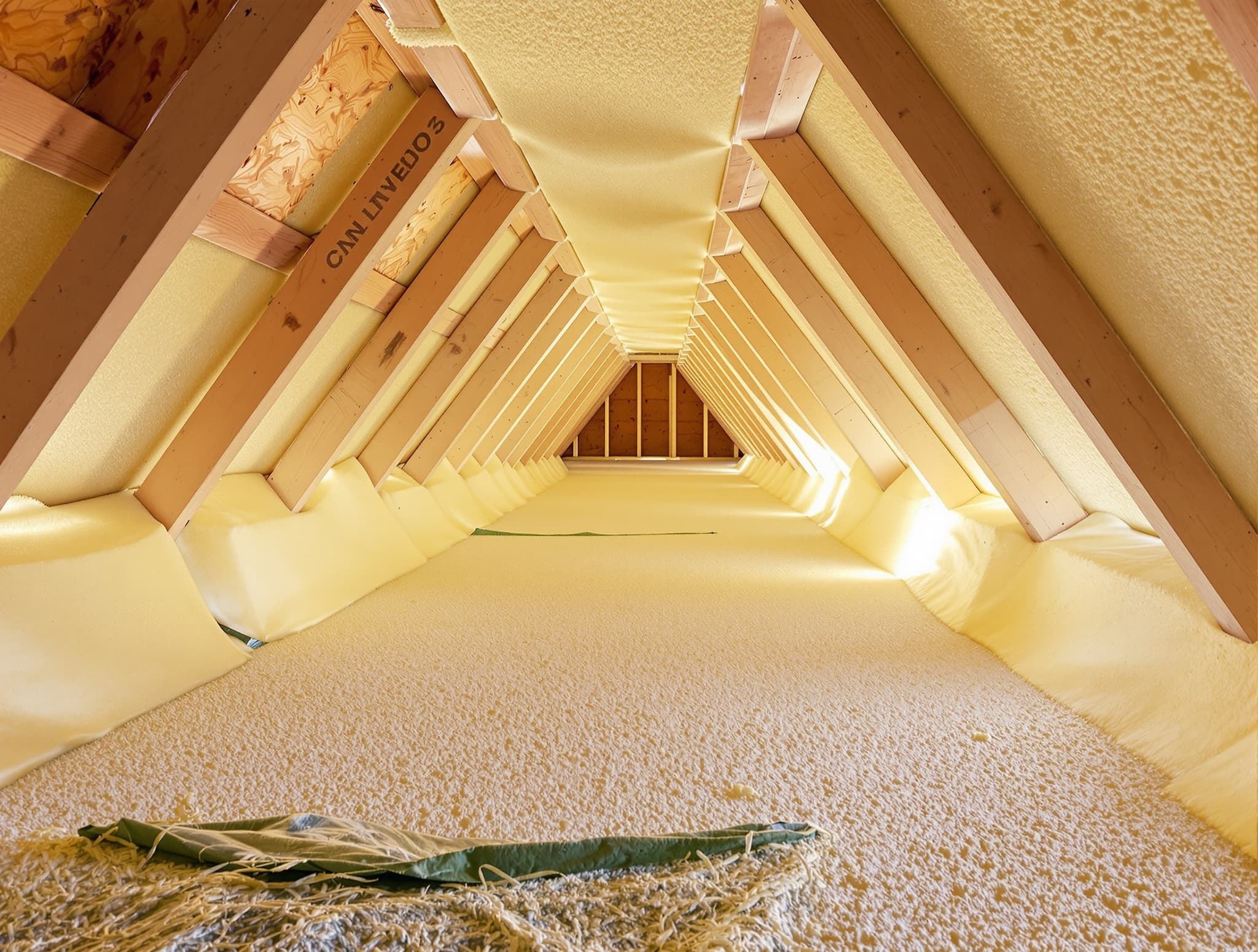
Spray foam usually goes on the underside of the roof deck, not the attic floor. That turns the attic into a space inside the home's thermal envelope. It is a good fit when ducts or HVAC equipment sit in the attic. It is also the usual choice for cathedral ceilings and finished attic rooms.
Open-cell foam costs less and is common on roof decks. Closed-cell foam has a higher R-value per inch and blocks moisture better. Both cost much more than blown-in for the same R-value. Our spray foam insulation page covers how the two compare in more detail.
What to check before adding attic insulation
The best material will underperform if these basics are skipped.
- Air sealing. Seal the gaps around lights, pipes and wires first. Include the attic hatch too. Insulation alone does not stop air leaks.
- Ventilation. In a vented attic, keep the soffit vents clear. Baffles hold insulation back from the vents.
- Old vermiculite. Loose, pebble-like insulation in older homes can contain asbestos. Do not disturb it. Have it tested first.
- Old wiring. Active knob-and-tube wiring should not be buried in insulation. Have an electrician check it.
- Wet or moldy insulation. It needs to come out before anything new goes in.
A home energy audit can show where your attic leaks the most. It can also show how much insulation you have now.
Which attic insulation is right for your home
Here is a simple way to decide.
- Open attic floor used for light storage. Air seal, then add blown-in insulation to R-49 or more.
- Ducts or an air handler in the attic. Consider spray foam on the roof deck.
- Finished attic room or cathedral ceiling. Spray foam or a dense, well-fitted system is usually best.
- Tight budget and an open floor. Blown-in gives the most R-value for the money.
Still unsure? Our guide on spray foam vs cellulose goes deeper into that choice. You can also see how we approach attic insulation from start to finish.
Common questions about attic insulation
Can you put new insulation over old insulation?
Usually, yes. If the old insulation is dry and clean, new blown-in can go right on top. Wet, moldy or pest-damaged insulation should come out first.
Is spray foam better than blown-in for an attic?
Not always. Spray foam costs more. It makes the most sense when the attic holds ducts or living space. For an open attic floor, blown-in usually gives more value.
How long does attic insulation last?
Dry, undisturbed attic insulation can last for decades. Water, pests and heavy foot traffic are what shorten its life.
Getting help with your attic
The best choice starts with a look at your attic. Call (631) 641-5536 to set up a free estimate. We can check what you have now. Then we can explain what it takes to reach the right level.
Still have questions?
This guide was written by Carlos Rivera. If your situation has a wrinkle we did not cover, call us direct. Most questions we answer by phone take five minutes.